The Prophet Muhammad ﷺ famously said “Cleanliness is half of faith”. Before prayer, Muslims complete a ritual known as ‘Wudhu’, which involves cleansing certain parts of the body using water.
These Wudhu routine cards and poster are an easy way for children to learn the steps involved in making Wudhu. Simply hang up the poster somewhere in the bathroom as a reference for your kids, or print out the routine cards for them to guess the correct order of the routine.
While Wudhu and prayers are not Fard (mandatory) for young children, they are an essential part of being a Muslim. Therefore, it is important for us to teach our children the importance of these routines before they reach adolescence. However, it is also important to remember that every child learns at their own pace, and we should be patient with our children as they learn these steps. The Prophet Muhammad ﷺ said “Allah is gentle and He loves gentleness, and He rewards for gentleness what is not granted for harshness, and He does not reward anything else like it.” – Sahih Muslim 2593.
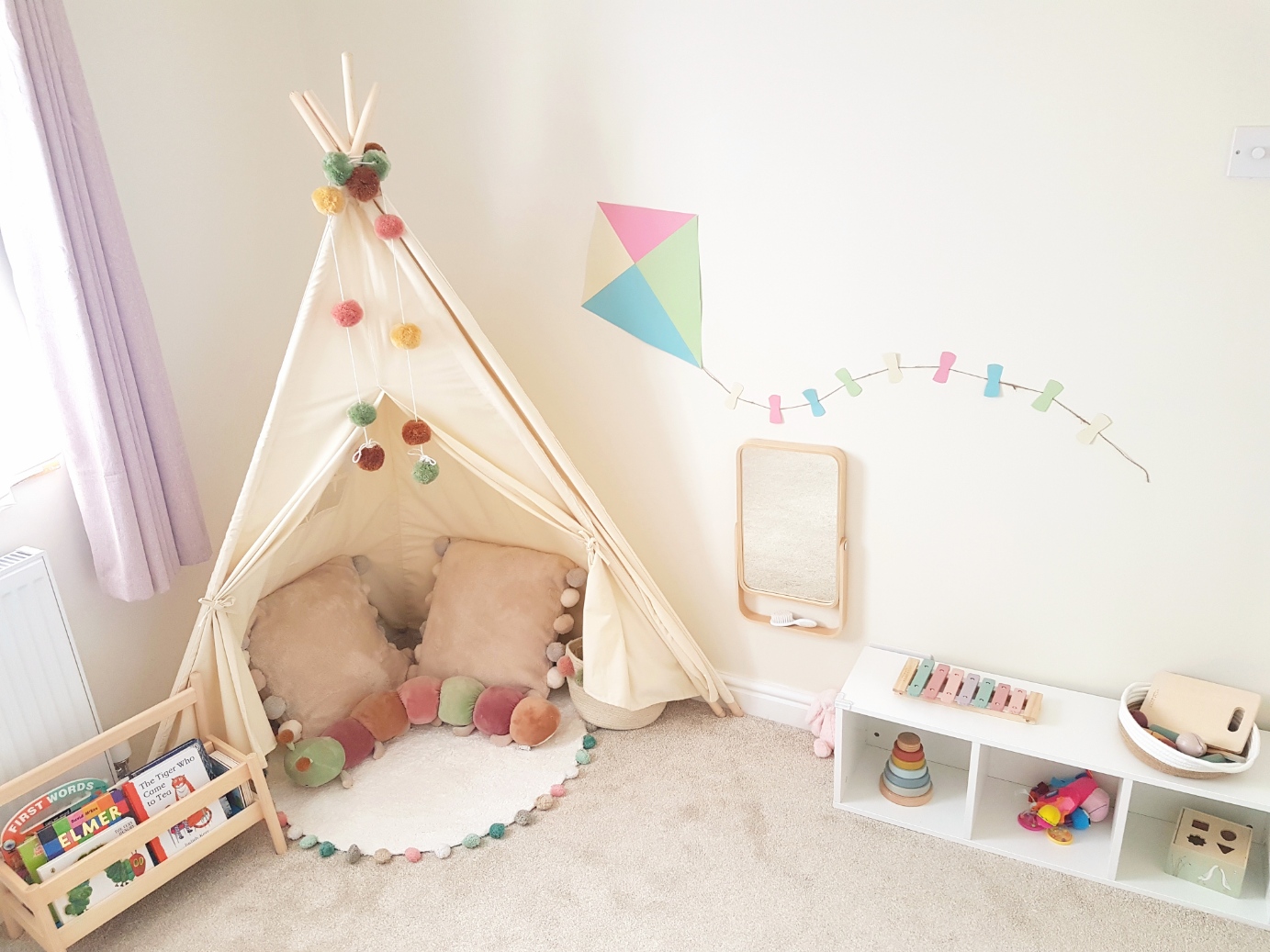
Since transforming Jamila’s room to make it more Montessori, it’s become my favourite room in the house. I had so much fun designing the space and was really able to let my creative juices flow – especially since the space isn’t too large, so I really had to think about where to place each item.
I wanted to create a space that met Jamila’s needs. As an adult, we see everything from a very different perspective to our children. A low shelf for us could be completely unreachable to them, and a piece of artwork on the wall at our eye level could be too high for them to even notice it. A core concept in Montessori is to create a prepared environment – one in which our children’s tools of play are accessible to them, where they are free to explore safely and can move easily from one activity to another. That’s something that initially drew me to Montessori – it’s a child-centred approach.
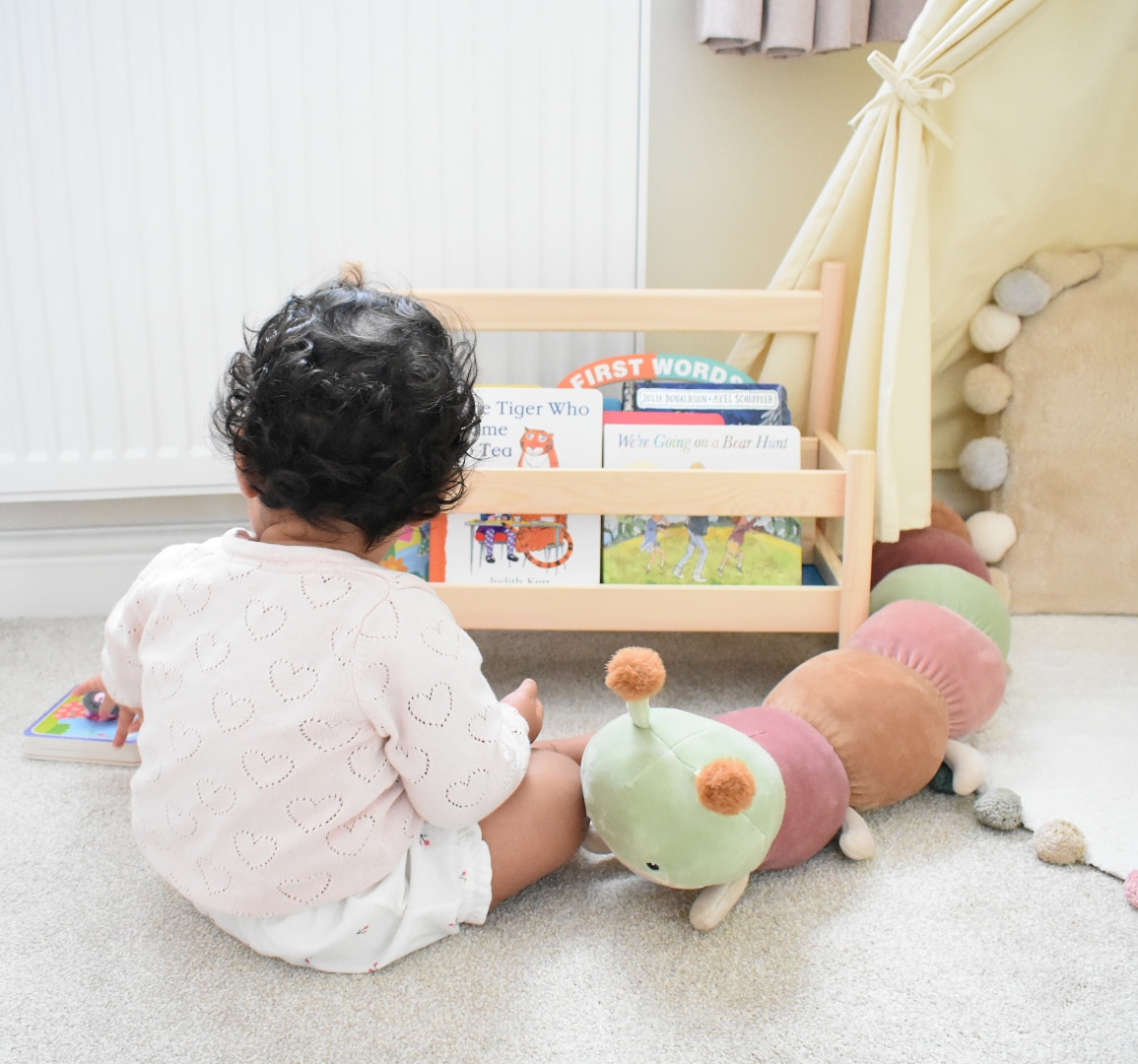
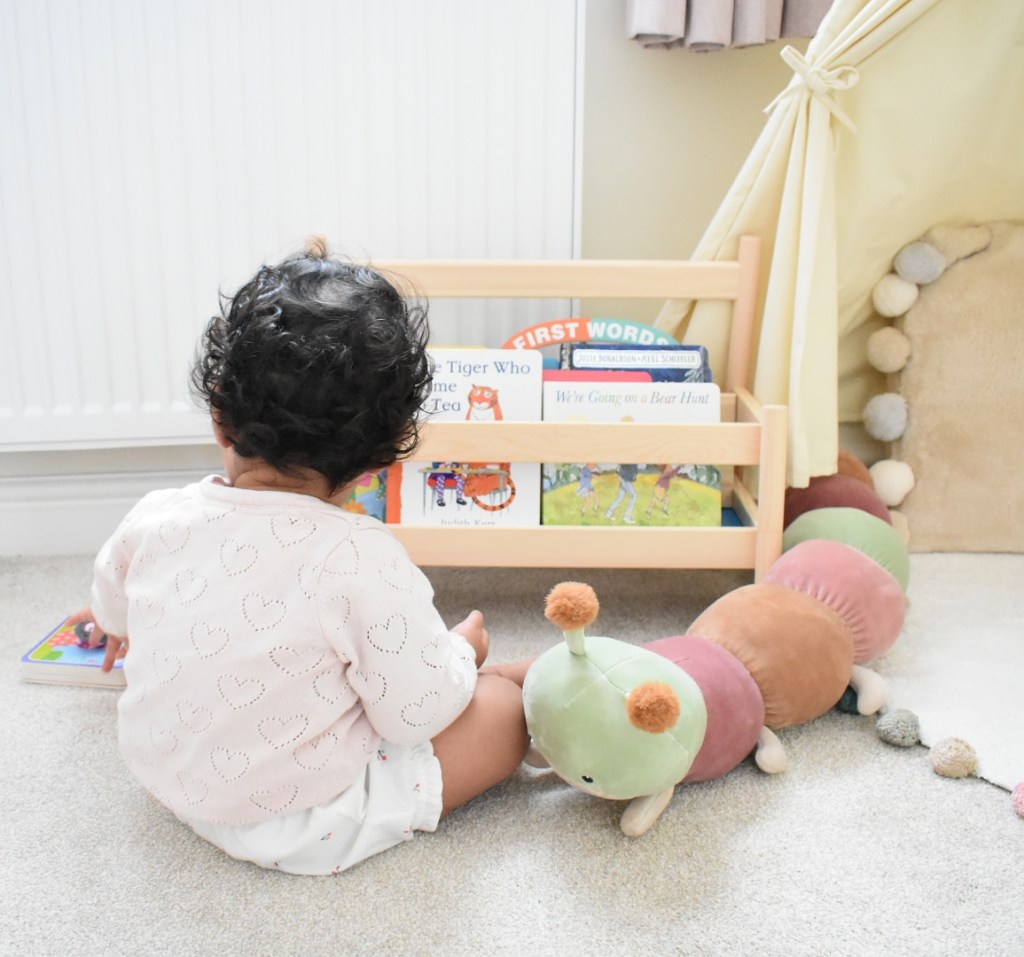
I started off with a classic Montessori room staple – a reading corner. I’ve always loved the idea of a teepee tent and this one appealed to me because of it’s yellow colour. It’s actually a four-point tent but I folded it into a three-point and it works perfectly in the space. I decorated it with a pompom garland, a matching rug, cushions and a basket. The basket contains some easily accessible items for Jamila, including teethers and a couple of her favourite soft toys. I chose to run wild with the pompom theme because if you can’t have an explosion of colour in the nursery, where can you? I finished it off with a book stand and loaded this with some of her favourites, although I rotate these once a week as she has quite a large collection of books. I love the idea of a book stand because she can see the titles clearly and choose which one she wants. At the moment she’s loving ‘I say Alhumdulillah‘ and ‘Elmer‘. Story time with her Abu is one of her favourite parts of the day, and this reading corner just makes it so much more special.
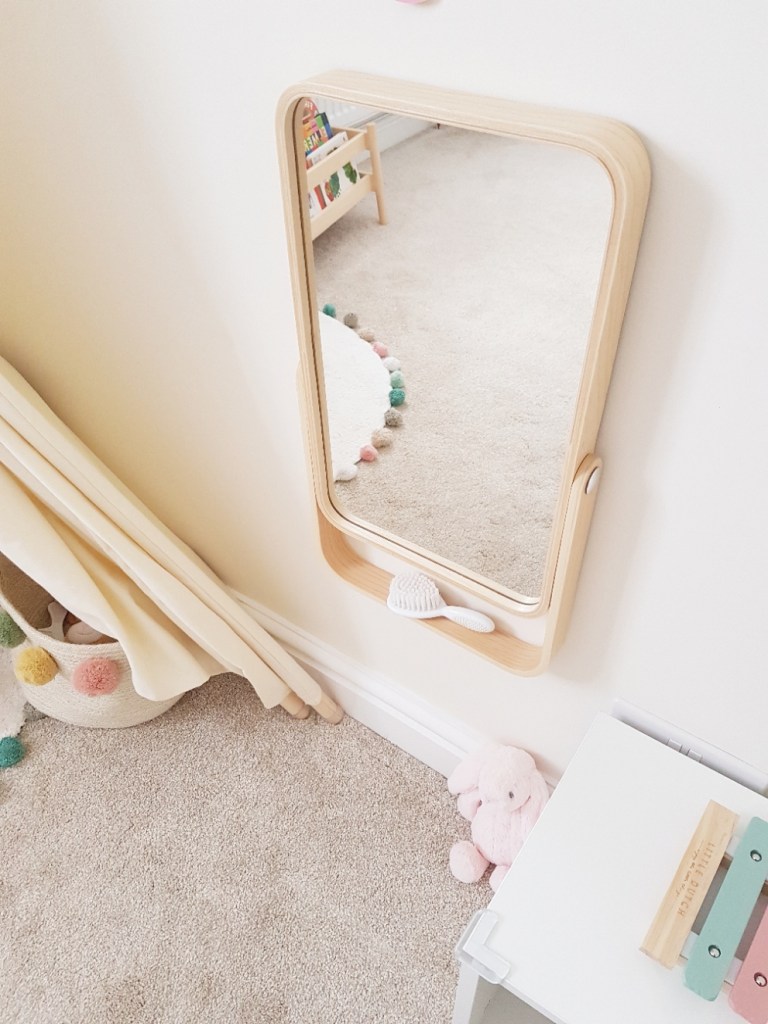
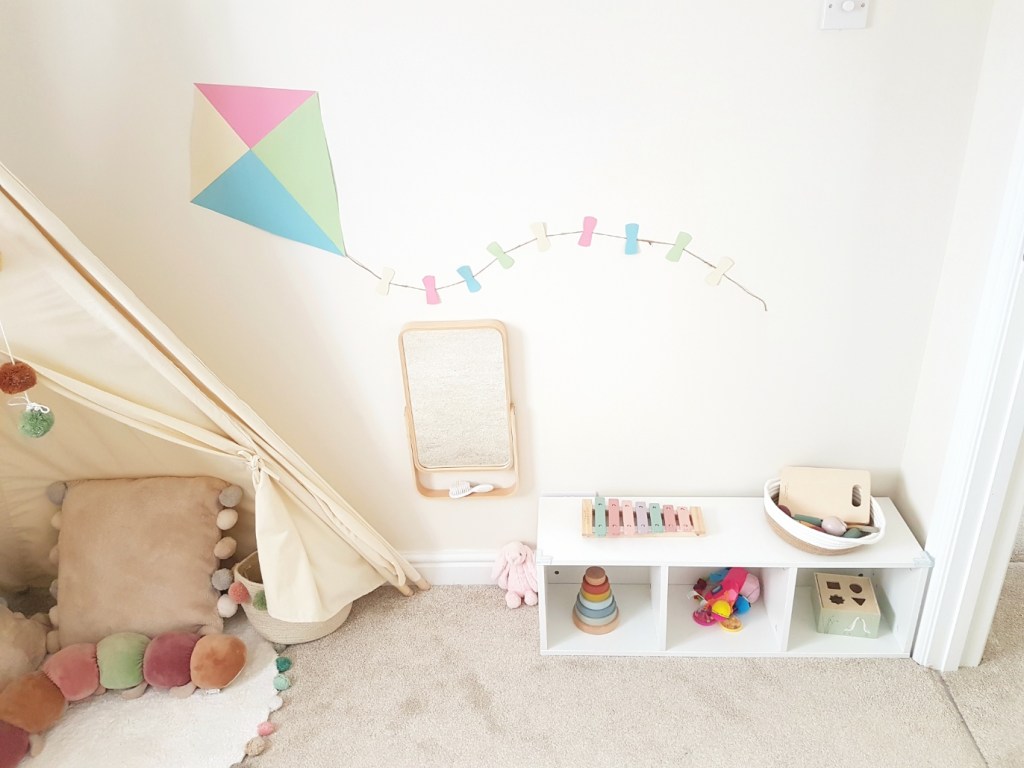
Next to her reading corner, I stuck a mirror to her wall using 3M strips. This will be her grooming/ dressing area, and when she’s a toddler she can use this space to comb her hair, get dressed, or just pull silly faces. Montessori recommends such a space to encourage independence in the child as they learn to do these things for themselves. I keep a toddler hair brush and a bow on the stand, which we use as a mini shelf.
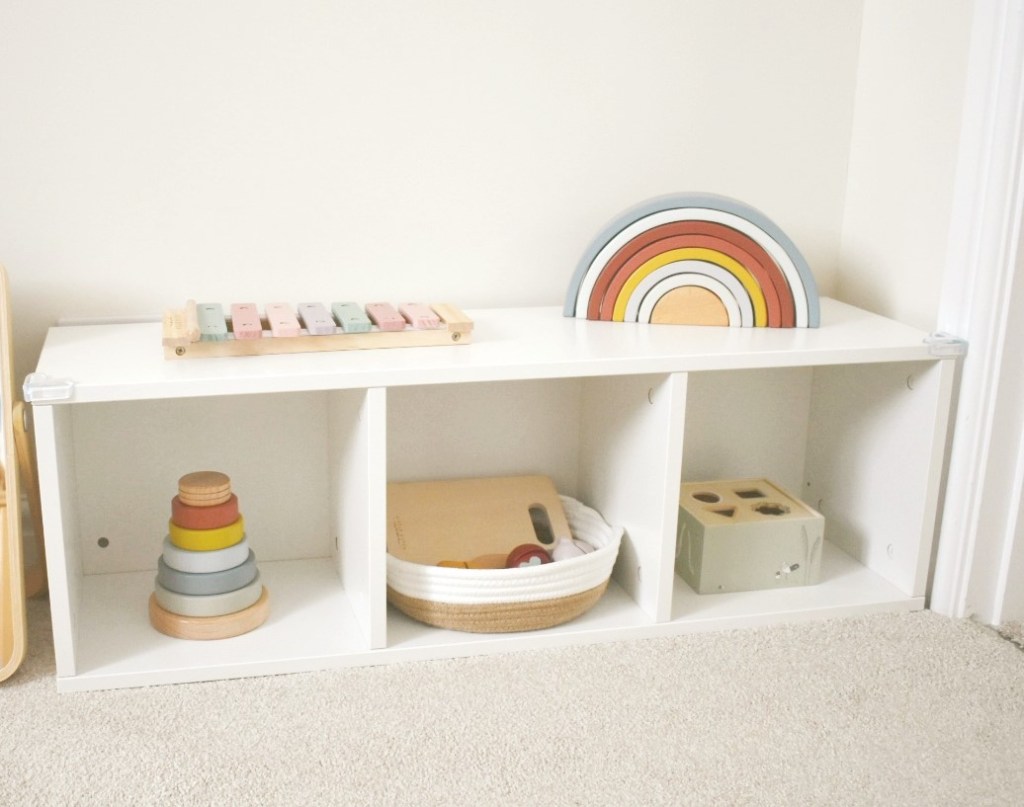
Next in her room is the classic Montessori shelf. The shelf is compartmentalised to separate activities, and as it’s low down children are able to easily access what they need. After carefully measuring her room we brought this one, because it fit perfectly in the space. It was easy to assemble and comfortably fits 6 of her toys or activities in it at a time, which is enough to provide her with options but not overwhelm her with them. I rotate her toys every week or so to keep things interesting, based on the skills that she’s working on mastering. The one’s not currently in rotation are kept in a storage box under her bed.
I finished off her shelf area with some art work – a simple paper kite, which I crafted myself using coloured card, jute rope, and washi tape. I attached this to the wall very low down so that it’s visible to her and I think it finishes off the space perfectly!
The other side of her room is fairly basic. We decided to keep Jamila in a cot rather than a floor bed for safety and sleep hygiene reasons, although we will be moving her to a floor bed in a couple of years inshaAllah. Under her cot, I keep storage boxes containing some extra blankets, toys, and clothes.
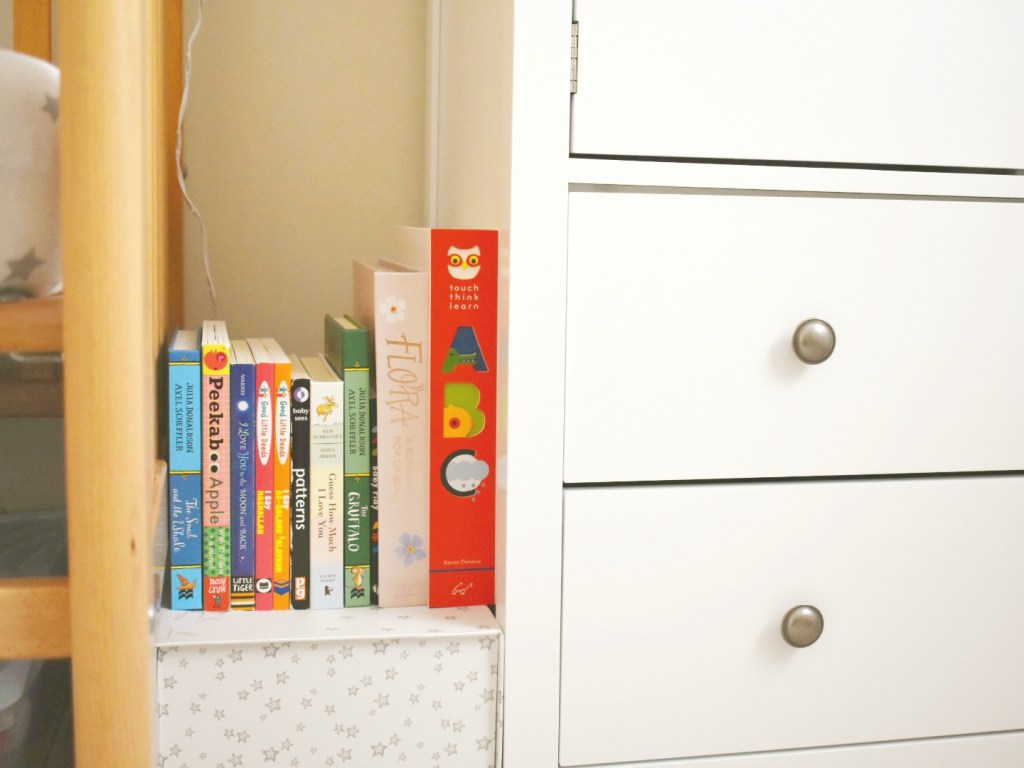
We also have a changing table with draws which are low enough for her to access herself, where we keep her clothes. As there was a small space between her cot and changing table, I’ve wedged in some extra books and created a little book corner, which I think is great because she often picks out books from this area. As it’s very close to the floor, it’s easy for her to access without me worrying that the books will fall and injure her. I’ve strung up some Routine Cards above her changing table, which she likes to look at and interact with whilst being changed.
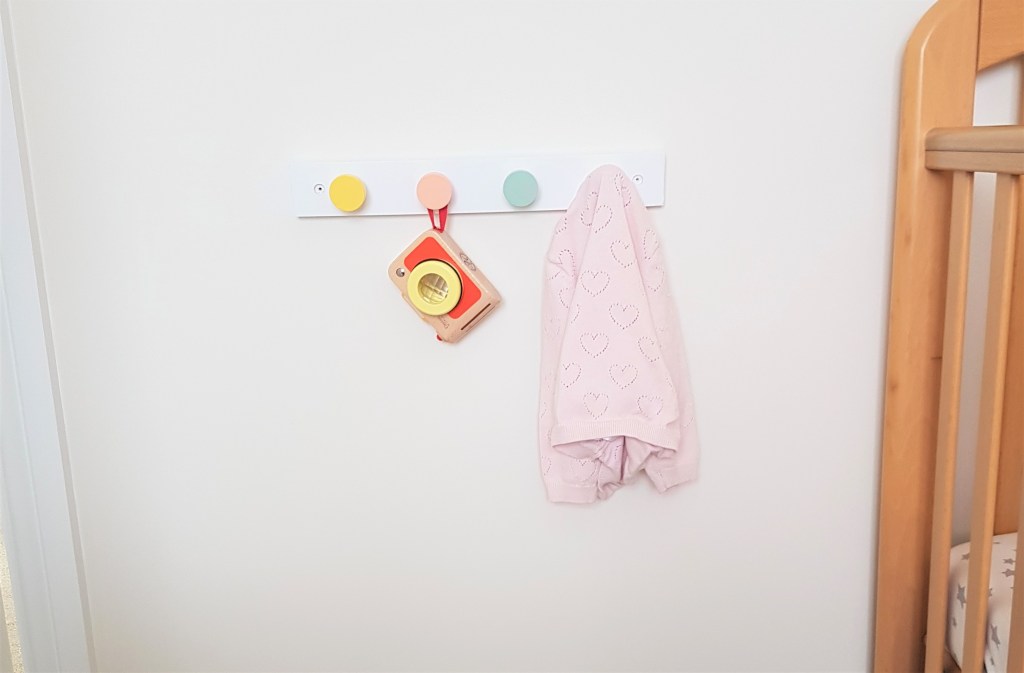
Finally, behind her door I’ve created a little area for her to hang up her coats and bags. I’ll be adding something similar for her in the hallway inshaAllah, but this little hanger was too cute to resist and matches her room décor perfectly.
Alhumdulillah, I’m so pleased with the way that her room turned out. Every section of the Nursery was carefully planned based on what would best meet Jamila’s needs, and because of this everything is completely child-proof and accessible to her. As she grows into a toddler, her room set-up will be a critical enabler for her in gaining independence, fostering curiosity, and permitting hands-on learning, inshaAllah.
With Eid al Adha just around the corner, we’ll be spending our weekend decorating the house, making ma’amou and sheer khurma, and finding colour co-ordinated outfits for the family (yes, i’m that mum). 🙂
While all of these things are memorable experiences for our children and ones that they will cherish into adulthood InshaAllah, it’s also important for us to teach our children the meaning behind the celebrations, and to pass on the traditions of the Prophet Muhammad ﷺ.
A couple of weeks ago I shared my Eid al Adha Routine cards, which highlight the sunnah activities that should be completed on the morning of Eid al Adha. Today, I’ve taken those routine cards and put them into poster format so that everything is on one page. You can print this and stick it up in your home, share it with your loved ones via WhatsApp, or use it as a checklist on the morning of Eid.
Once a quarter, I will be sharing my top 5 Montessori-inspired items with you. These will be tried and tested by my little one, Jamila Noor. They can include anything from toys, to books, to furniture items, and include the items most used and loved by her, so you know that everything is 100% child approved. 🙂
This quarter, Jamila moved from being an 8 month old baby just starting to crawl, to a 10 month old almost-toddler – confidently moving around the house, coasting on furniture and developing a cheeky little personality. Alhumdulilah, how time has flown!
It was difficult to narrow down her top 5 this quarter, because she’s made such huge leaps developmentally, and her interests are constantly changing as she learns to master new skills. However, the 5 items below have been consistently reached for and were useful in helping her to achieve her milestones.
Object Permanence Box
Between 8 to 10 months, babies begin to realise that objects continue to exist when they can no longer see them. An object permanence box is a great way to support this discovery and has also been pivotal in establishing Jamila’s hand-eye co-ordination. Initially she struggled to put the ball into the hole, but now she gets it in confidently almost every time, Alhumdulillah.
Book Display
We recently brought Jamila the Ikea Flisat Book Display, and absolutely love it. One of her favourite activities is being read to, and she’s recently started to choose a book herself and sit in her reading corner. I love to see her chuckling as she flicks through the pages, even if she doesn’t understand them just yet! Book displays are great as they allow your child to view the book covers, so choosing the one they want is so much easier.
I Say Alhumdulillah, by Noor H Dee Iput
My sister brought a set of ‘Good Little Deeds’ books for Jamila on Eid, and they VERY quickly became her favourites. We love this one in particular, as whenever Jamila sneezes she looks around the room for myself and my husband, anticipating our ‘Alhumdulillah!’, which she finds hilarious.
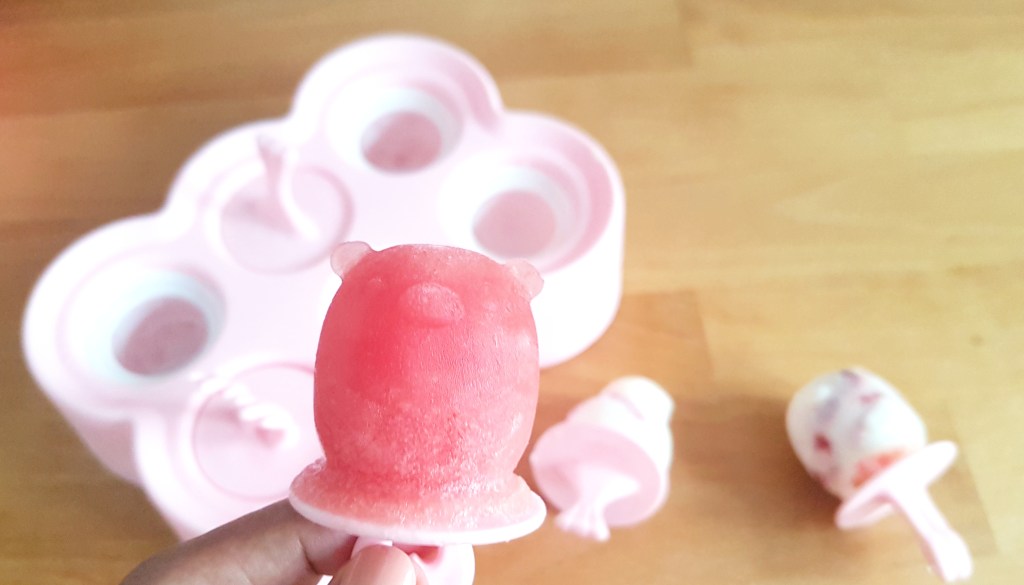
Ice Cream Mould
This ice-cream mould has been a game-changer with teething. Jamila was an early teether and is currently pushing out tooth number 9! I’ve been freezing some yogurt and strawberries (her favourite), and they provide fast relief for her sore gums. They’re also great for hand-eye co-ordination, and they’re something we can make together as she grows. I’d strongly recommend these to any parent of a teething baby.
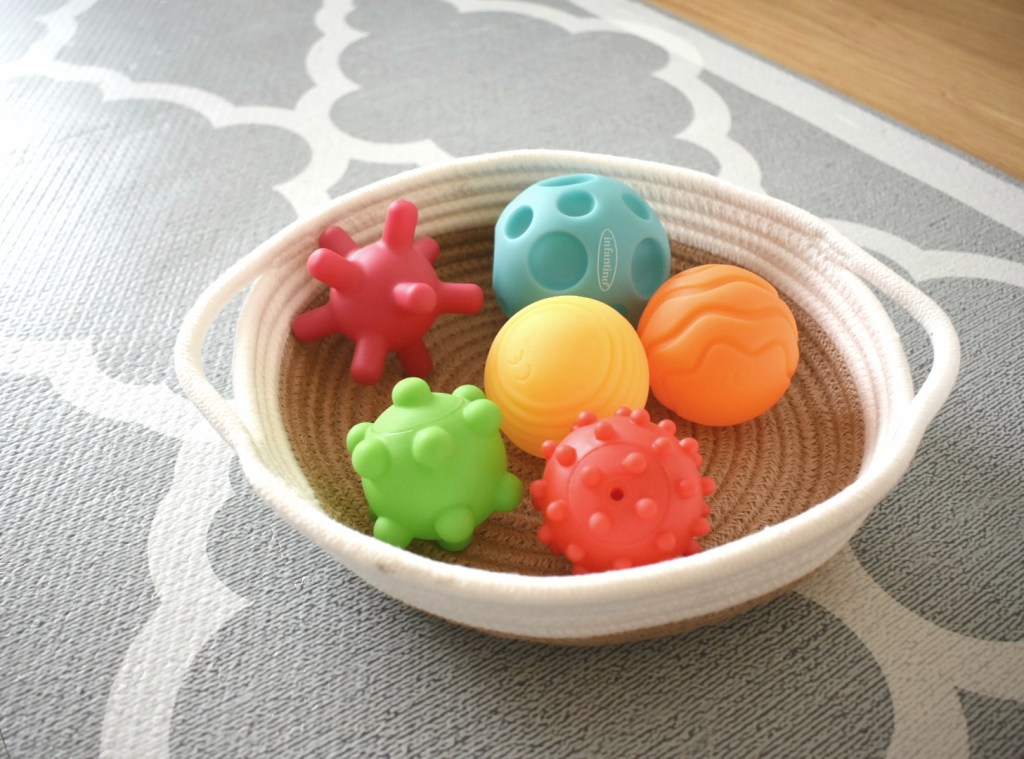
Rope Baskets
I use these rope baskets to display toys in Jamila’s shelf. As they’re soft and made of rope rather than wicker, I don’t need to worry about her accidently hitting herself with them, or causing any scratches on the floor. They’re the perfect size to hold sensory balls, puzzle pieces, or building blocks.
I love using routine cards to organise Jamila’s day. I’d say it’s the adult equivalent of having a to-do list, only with cute pictures and much less stress! Routine cards are a great way to add structure to your day, and can allow your child to familiarise themselves with sequences of events.
As Muslims, special events such as Eid al Adha require us to follow certain rituals or practices in accordance with the Sunnah. Eid routine cards are a great way for us to pass this knowledge onto our children, whilst they also benefit from a sense of control on the day as they know what’s coming up next.
My Eid al Adha routine cards are easy to read and understand, and can help your little one to organise their day. Simply print them out and stick them up on a wall, or hand your child the stack and let them guess the correct order of events!
As a child I loved Eid mornings – Waking up early and greeting my family with an excited ‘Eid Mubarak!’, singing Takbeer on the way to the masjid, and praying with our friends there. These are memories that I cherish as an adult, and ones which I hope to pass on to my children, InshaAllah.
If you had asked me a a year ago whether I would want a children’s area in my living room, I probably would have laughed. I’m a minimalist when it comes to my space – I like things to be open, light, and uncluttered. The thought of brightly coloured children’s toys scattered around my house would have given me mild anxiety, but having been a parent for almost a year now, I can tell you – things change.
The living room isn’t just a space for adults. It’s also where my little Jamila spends the majority of her day – whether that’s eating, crawling around, or jumping on our backs as we complete our daily prayers. As she transitions from baby to toddler, the more I come to understand that our space is her space too. The way that we design, care for, and structure our environment should also therefore reflect her needs.
One of the key principles of Montessori is to have a prepared environment. The environment should be beautiful not just to us as adults, but also to our children too. Their tools of play should be accessible to them, organised in a way that provides them with structure whilst allowing them to move freely between activities.
These were my aims when creating a space for my little one in our living room, and I feel that I have achieved this without compromising on the aesthetic of my home. I’ve actually come to love her little play area, or ‘play station’ as my husband calls it, much more than I thought I would – because whenever I see it, my heart feels full of gratitude to Allah for having blessed us with such a wonderful little girl who fills our lives with chaos and colour.
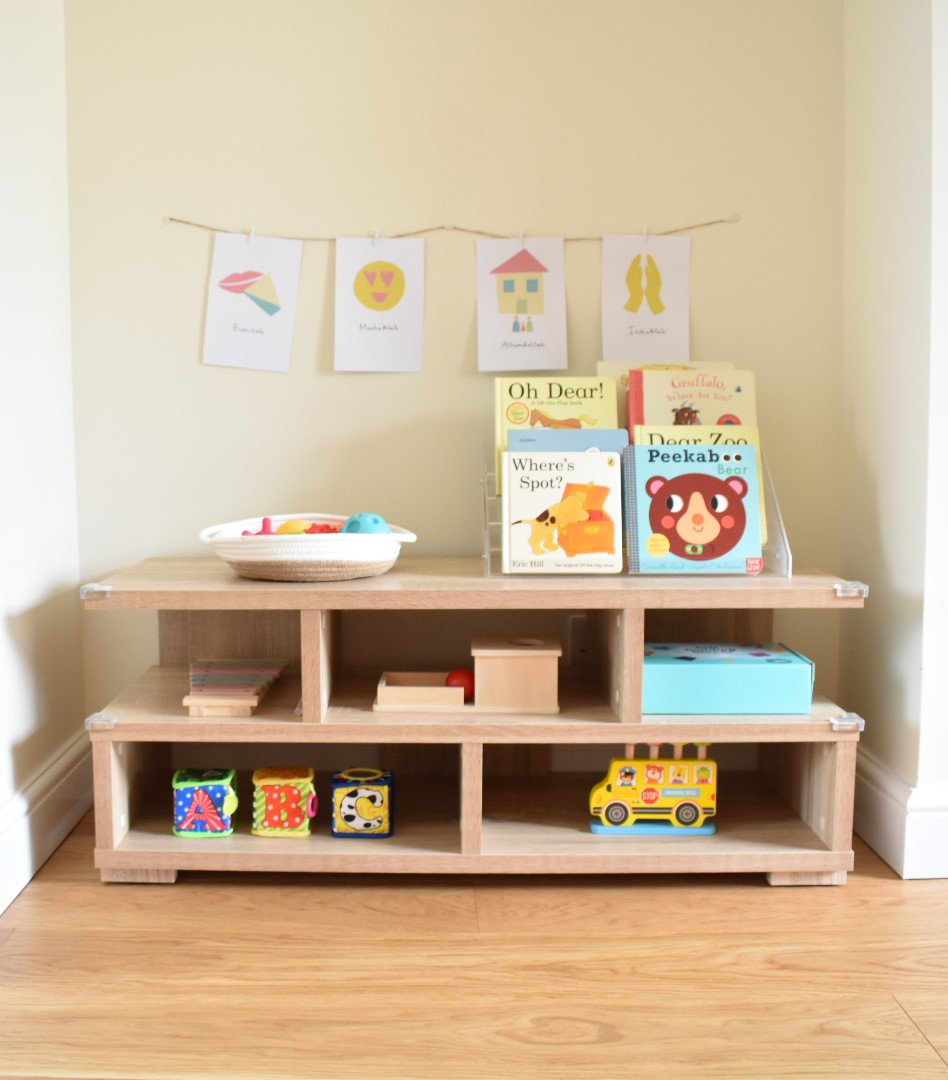
To start off with, we purchased a low TV stand which we use as a shelf. I particularly liked this one because of the unusual design, which can be used to section out different activities. The space provides Jamila with a few different options, but not enough to overwhelm her. It also fits perfectly into a little alcove, which means that the unit is tucked away but still accessible.
Jamila loves reading (or rather being read to), so I wanted to make her books accessible to her in the living room. In the past I’d placed a pile of books on top of the shelf, but I wanted to make these easier for her to reach. I purchased a card stand from Amazon and it’s worked perfectly as a book stand, allowing her to see clearly which options are available and choose which ones she wants to read.
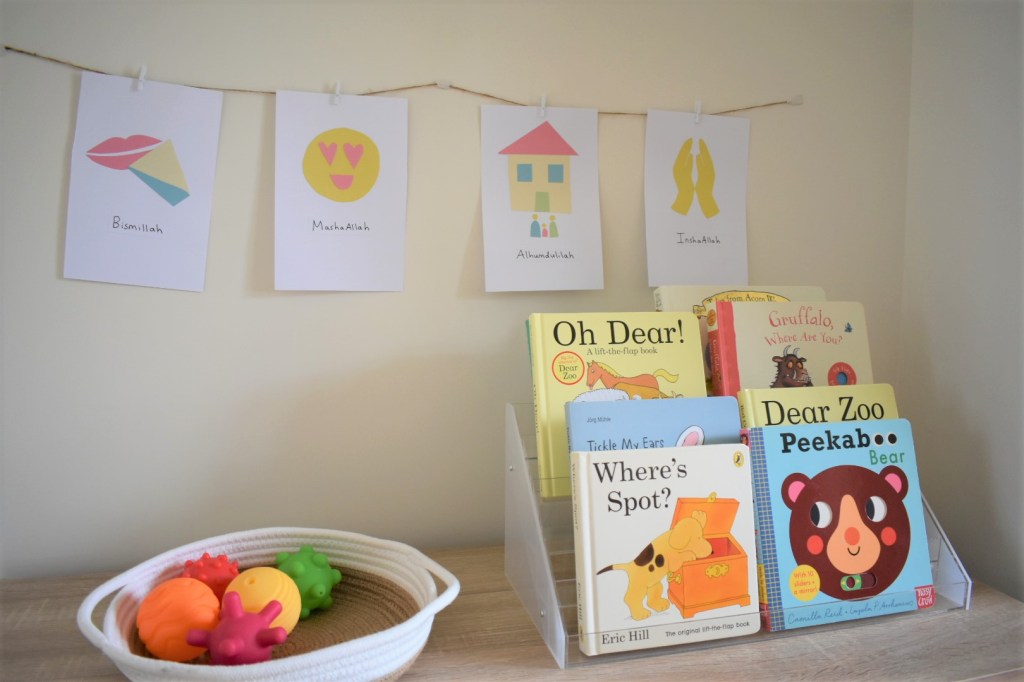
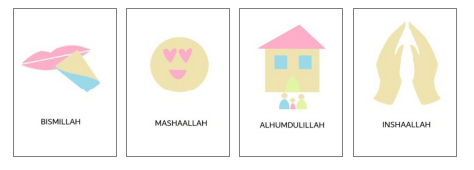
Montessori encourages artwork to be displayed at the child’s eye-level. At the moment Jamila is rapidly picking up language, and although she can’t quite string sentences together, she does understand a lot. I’m encouraging her to understand words like ‘Bismillah’ and ‘Alhumdulillah’ using my Muslim Manners Language Cards, which I’ve strung up on the wall and use with her daily. I love seeing her face light up after sneezing as she waits for our enthusiastic ‘Alhumdulillah!’, or seeing her open her mouth for food when I say ‘Bismillah’ during meals. You can download them for free along with other useful tools from my Resources page.
I’ve filled the shelves with a few of her current favourite toys, including sensory balls, an object permanence box, a xylophone, and building blocks. A key principle in Montessori is observation. As parents, it’s important to observe which activities your child is enjoying and which ones they’ve moved on from, and rotating the activities accordingly. When she’s a little older and less inclined to put absolutely everything straight into her mouth, I’ll be introducing her to a plant which she can nurture and care for, and this will (InshaAllah) sit on her shelf, too.
Language cards are a Montessori concept used to support toddlers in their language development. The idea with these cards is to introduce toddlers new concepts or words that they are able to practice in their daily lives.
As Muslims, commonly used words such as ‘Bismillah’, ‘MashaAllah’, ‘InshaAllah’ and ‘Alhumdulillah’ are part of our basic etiquette. For a child, learning how to use these words correctly can take some practice, but supporting our children with their learning it is well worth the investment to ensure that the Sunnah is passed on through generations.
My Muslim Manners Language Cards are a great way to introduce your child to commonly used Islamic phrases. I first made these using coloured card but I’ve re-created them in digital format for you as I understand that not every parent has the time or energy to make them from scratch!
I’ve currently got these stung up on a piece of string in my living room’s Montessori area, at the childs eye-level so that they can be viewed easily. I think it would be a great game for a toddler to find as many ways to use each word as possible. For example, you could challenge your child to say ‘Alhumdulillah!’ whenever they see or hear something worthy of praise, or ‘Bismillah!’ before taking an action like drinking water, or starting a new game. By rotating the cards, the child is able to learn each of the words and how to incorporate them into their daily lives.
I hope that you find these useful as an aid for teaching your children Islamic etiquette, InshaAllah.
Montessori is a child-centred method of education that encourages independence, respect, and freedom within limits. Developed by scientist Maria Montessori in 1870, the hands-on approach to learning has 7 main principles;
Play is Work
Children have a natural desire for knowledge, and a child’s play is viewed as their ‘work’. They should therefore be supported with the correct tools.
Independence
Rather than spoon feeding our children with the answers, the Montessori approach encourages the child to explore and use their initiative.
Prepared Environment
Toddlers love order and routine, and the Montessori method ensures that the child’s environment is accessible, structured, and allows them to move freely from one activity to another.
Hands-On Learning
Children learn through their experiences – a phenomenon which Maria Montessori referred to as ‘the absorbent mind’, in reference to their sponge-like ability to take in new information.
Freedom Within Limits
We as adults provide our children with several approved options, and allow the child to choose for themselves which one to take. Montessori is not about letting the child do whatever they want – it’s about setting limits whilst giving the child freedom of choice within those limits.
Observation
As a parent we are responsible for observing our child in order to identify the interests or skills that they are currently mastering, and to provide them with the right environment to support the development of these interests or skills.
Respect
Each child is unique in their method of learning, their capabilities and their interests. The Montessori method encourages respectfulness between the child and their parent.
A Montessori learning style can be applied at any age from 0 to 6 years. For me, education begins in the home and this blog provides Muslim parents with the stepping stones and resources that they need to incorporate the Sunnah, Islamic values and practices into every day life using Montessori methods.
As Salaamu Alaykum, and welcome to Montessori Muslim! A Muslim parents guide to Montessori.
I’m Sumaya – A twenty-something year old Montessori novice, navigating my way through raising my baby girl to be independent, playful, respectful and observant. This little corner of the internet is my space to share my Montessori journey, as well as creating useful resources, activities and inspiration to share with fellow Muslim parents.
I hope that you enjoy reading my adventures, flicking through my language and routine cards with your little ones, and implementing Montessori practices into your own day-to-day lives, whilst also practicing and nourishing Islamic values in our children.












 Montessori Muslim